Dec 12, 2025
BasiGo Electric Buses: How a $41.5M Series A is Transforming Public Transport in Africa
Zellow Analysis:BasiGo, based in Nairobi, leads electric bus deployment in Africa with 100 vehicles operating in Kenya and Rwanda following a 41.5 million dollar Series A round and investment from Proparco. The company uses pay-as-you-go financing, separating bus chassis, battery, and charging costs to make electric buses accessible and economically competitive. With East Africa generating over 70 percent of electricity from renewables, BasiGo’s local assembly and charging depots support fleet electrification while reducing CO2 emissions from diesel buses.
The One-Gigaton Diesel Problem: Why Africa’s Bus System Must Go Electric
Africa's public transport system processes over one million daily bus trips, yet this massive diesel-powered fleet creates environmental, economic, and health crises demanding urgent transformation.
Urban Growth Driving Diesel Dependence
By 2025, Africa is expected to host 10 mega-cities, each housing more than 10 million residents. In these dense urban environments, diesel buses account for around 40% of daily commuter trips, making public transport simultaneously essential for mobility and a primary contributor to urban air pollution.
The triple crisis of diesel dependence:
Environmental damage: Close to one gigaton of CO₂ is emitted annually from Africa's bus fleet, representing a substantial contribution to climate change, with urban air pollution from tailpipe emissions creating severe health impacts, including respiratory diseases, cardiovascular problems, and premature deaths concentrated in low-income neighbourhoods near major bus routes.
Economic vulnerability: Deepening reliance on imported diesel creates foreign exchange pressures, exposes operators to fuel price volatility, and sends billions of dollars annually out of African economies to petroleum-exporting nations rather than investing in domestic energy infrastructure.
Operational inefficiency: Diesel buses require frequent maintenance, experience downtime from mechanical issues, and have a higher total cost of ownership than electric alternatives when accounting for fuel, maintenance, and health costs.
Zellow Observation: The one gigaton annual CO₂ emission from Africa's bus fleet exceeds many countries' total emissions, yet represents an addressable target through technology that already exists and is cost-competitive. Unlike challenges requiring breakthrough innovations, the electric bus transition is an execution and financing problem, not a technology development problem.
Africa’s 70% Renewable Grid: The Hidden Advantage Driving E-Bus Adoption
Africa possesses some of the world's most significant clean energy resources, with East Africa already generating over 70% of its electricity from renewable sources such as hydropower, geothermal, solar, and wind.
Why This Makes Electric Buses More Impactful in Africa
This renewable energy dominance creates unique advantages for electric vehicle adoption compared to regions where electricity generation relies heavily on coal or natural gas.
Greater CO₂ reduction than most global regions: When electric buses charge from 70% renewable grids, the well-to-wheel emissions reduction compared to diesel exceeds 85%, far higher than the 40-60% reduction achieved in coal-dependent grids.
Improved urban air quality: Eliminating tailpipe emissions in dense urban areas where diesel buses concentrate pollution delivers immediate health benefits to millions of residents, particularly vulnerable populations, including children and the elderly living near major transport corridors.
Lower operating costs: Electricity from renewables costs substantially less than imported diesel, creating 40-60% fuel cost savings that improve operator economics while reducing environmental impact.
Enhanced energy independence: Transitioning from imported diesel to domestic renewable electricity keeps energy expenditure within national economies, supporting local employment in power generation, distribution, and maintenance.
Zellow Observation: Africa's 70% renewable electricity generation positions the continent to achieve a cleaner transport transition than developed markets, which are still dependent on fossil fuel power generation. This represents a rare case where the African infrastructure "disadvantage" of limited fossil fuel generation capacity becomes a strategic advantage for leapfrogging to clean transport systems.
How BasiGo’s Pay-As-You-Go Model Removes the Biggest Barrier to Electric Buses
BasiGo has solved the primary barrier preventing African transport operators from adopting electric buses: the higher upfront capital cost that traditional purchase models require.
How the Financing Model Works
BasiGo removes the financial barriers to electric transport through a model that allows operators to purchase the bus chassis while paying for the battery and charging services separately on a pay-as-you-go basis. This structure makes electric buses as accessible as their diesel counterparts while delivering superior economics.
Traditional electric bus purchase challenge: Electric buses cost $250,000-$400,000 upfront compared to $80,000-$120,000 for diesel equivalents. While the total cost of ownership over 10-15 years favours electric due to lower fuel and maintenance costs, transport operators lacking access to patient capital cannot afford the initial investment.
BasiGo's financing innovation: By separating chassis purchase from battery and charging services, BasiGo reduces the upfront cost to levels comparable with diesel buses. Operators then pay usage-based fees for battery and charging, aligning payments with actual revenue generation from bus operations.
Why this model enables adoption: Transport operators can transition to electric buses without requiring fundamentally different capital structures, bank relationships, or financing sophistication. The pay-as-you-go structure matches payment timing to revenue generation, eliminating the working capital strain that traditional EV purchases create.
Zellow Observation: The pay-as-you-go model represents financial innovation as important as the electric bus technology itself. Many African business model innovations succeed not through technology breakthroughs but through adapting proven technologies to African financial realities through creative structuring.
East Africa’s Largest E-Bus Deployment: 100 Buses in Kenya and Rwanda
Following a successful $41.5 million Series A funding round, BasiGo expanded operations from Kenya into Rwanda and is preparing for further scale after receiving strategic investment from Proparco, the French development finance institution.
Current Deployment and Regional Expansion
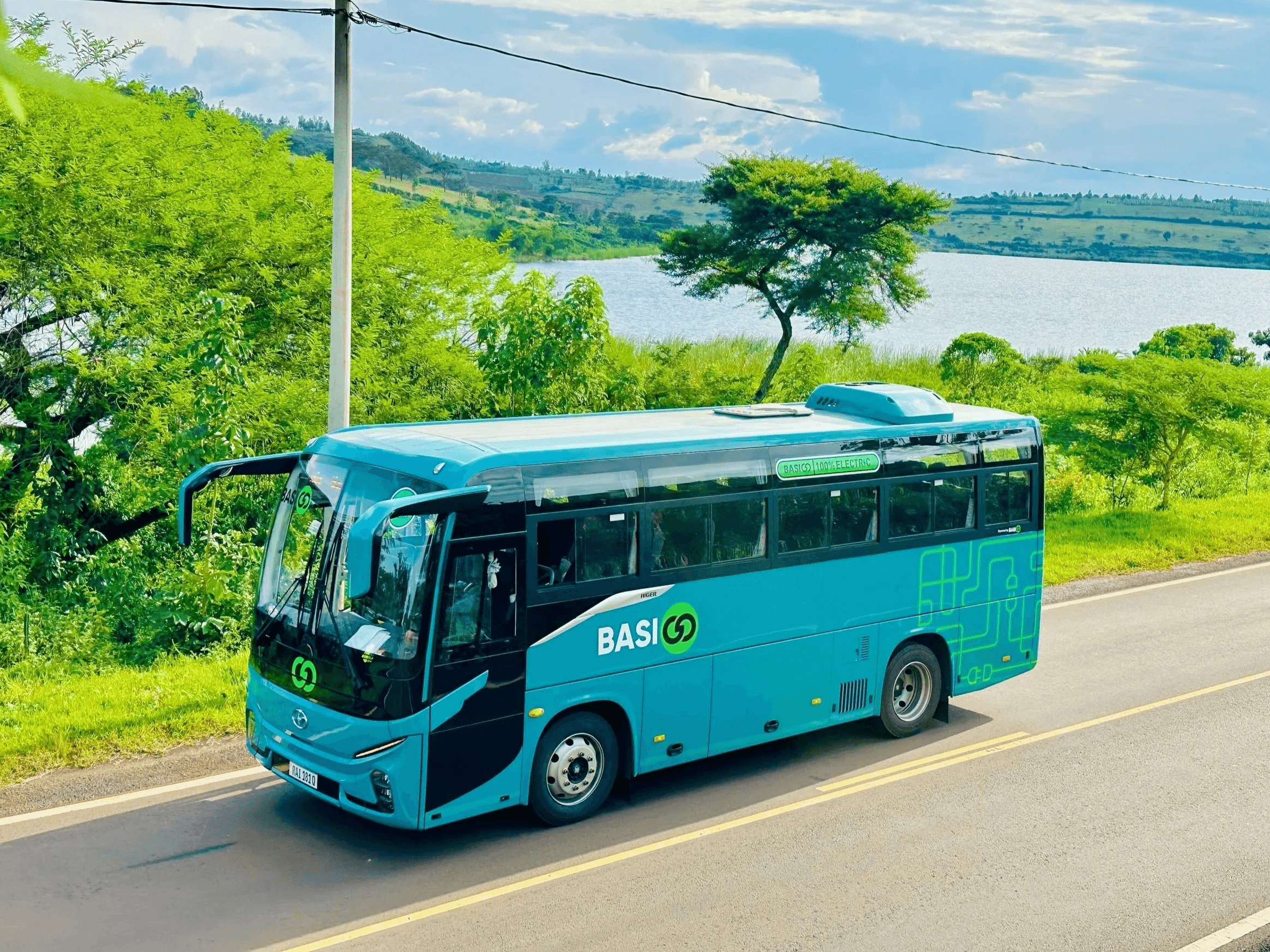
The company has already deployed 100 electric buses across Kenya and Rwanda, locally assembles its vehicles, and operates dedicated charging infrastructure—all designed to support mass transit operators transitioning away from diesel.
The 100-bus milestone significance: This represents Africa's largest operational electric bus fleet, demonstrating that electric public transport works at a commercial scale rather than remaining in pilot program status. The 100 buses collectively eliminate thousands of tons of CO₂ annually while proving operational reliability to sceptical operators considering fleet transitions.
Local assembly operations: BasiGo locally assembles vehicles rather than importing fully-built buses, creating local employment, developing technical expertise, reducing import costs, and enabling customization for African road conditions and operational requirements.
Rwanda expansion: Entry into Rwanda following Kenya's success demonstrates the regional scalability of BasiGo's model. Rwanda's clean energy grid (over 60% renewable) and compact urban geography in Kigali make it an ideal second market for validating cross-border expansion capabilities.
The 1,000 Bus Target
CEO and co-founder Jit Bhattacharya emphasised that since 2021, BasiGo has demonstrated that electric buses not only outperform diesel economically but also eliminate CO₂ emissions and improve passenger comfort. The latest investment accelerates efforts to scale local assembly, expand charging infrastructure, and advance towards deploying 1,000 electric buses.
The 1,000 bus target implications: This represents 1% of Africa's estimated one million daily bus fleet, creating a proof point for continent-wide scaling. At 1,000 buses, BasiGo would eliminate approximately 100,000 tons of CO₂ annually, equal to removing 20,000 passenger cars from roads.
Why Charging Infrastructure Determines the Future of Electric Buses in Africa
In partnership with Kenya Power, BasiGo has launched new electric bus charging depots at Taj Mall (Pipeline), Komarock, and Riruta, with a fourth depot in Juja set to open by the end of December.
Technical Specifications Enabling Fleet Operations
Each depot features high-capacity DC fast chargers with both GB/T and CCS2 connector compatibility, sequential charging enabling up to 100 buses per day, access to the national e-mobility tariff, and night-time utilisation of surplus grid capacity for efficient demand management.
Why depot infrastructure matters: Electric buses require reliable, high-power charging infrastructure that diesel buses don't need. Without adequate charging capacity, electric bus adoption fails regardless of vehicle quality or financing availability. BasiGo's investment in owned-and-operated charging infrastructure removes this dependency on third-party charging networks.
Sequential charging innovation: The ability to charge up to 100 buses daily per depot using sequential charging maximizes infrastructure utilization, reducing the number of chargers required per bus and improving project economics that make expansion financially sustainable.
Grid demand management: Night-time charging when electricity demand and prices are lowest improves both operating economics and grid efficiency, enabling utilities to utilize baseload generation capacity that would otherwise remain underutilized during off-peak hours.
How BasiGo Ensures E-Bus Reliability Through Local Service Centres
A dedicated service and customer support centre at the Taj Mall site provides maintenance for CATL battery systems, on-site technical assistance for operators, and improved fleet reliability as electric bus adoption increases.
Zellow Observation: The integrated approach combining buses, financing, charging infrastructure, and maintenance services addresses the full value chain rather than merely providing vehicles. This comprehensive model reduces operator risk by ensuring all dependencies for successful electric bus operations are controlled by a single provider with aligned incentives.
How Kenya Power and Proparco are Accelerating Africa’s Electric Mobility Shift
Proparco's Strategic Investment
Proparco's funding underscores strong international confidence in BasiGo's model and its potential for continent-wide impact. Jean Guyonnet-Dupérat, Proparco's Regional Director for East Africa, highlighted that BasiGo's locally assembled buses create jobs, improve air quality, and support climate commitments under global frameworks such as the Paris Agreement.
Development finance institution involvement signals: When DFIs like Proparco invest, it validates business model viability, derisks projects for commercial investors who follow DFI lead, and often comes with patient capital tolerating longer payback periods than commercial VCs require.
Kenya Power Partnership
Kenya Power's Managing Director and CEO, Dr. (Eng.) Joseph Siror noted that supporting electric transport aligns with the utility's mandate to provide reliable, accessible electricity for the nation's evolving mobility needs.
Utility partnership strategic importance: Kenya Power's commitment to electric bus charging infrastructure reduces regulatory uncertainty, ensures grid capacity allocation for transport electrification, and potentially provides favorable tariff structures that improve electric bus economics compared to diesel alternatives.
Zellow Strategic Framework: The Five Pillars Required for Africa’s Electric Bus Adoption
Understanding BasiGo's success requires recognising the interdependent elements that must align for electric public transport to achieve commercial scale.
Element One: Financial Innovation
Pay-as-you-go financing removes the upfront capital barrier that prevents operators from considering electric alternatives. Without this innovation, electric buses remain economically inaccessible regardless of their superior total cost of ownership.
Element Two: Infrastructure Development
Owned-and-operated charging network ensures reliability and eliminates dependency on third-party charging providers who may lack the incentive to serve public transport fleets requiring high-power, high-utilization charging infrastructure.
Element Three: Local Assembly and Servicing
In-country assembly and maintenance builds local technical capacity, reduces import costs and currency exposure, and ensures rapid response to operational issues that could otherwise strand buses and create operator losses.
Element Four: Renewable Energy Alignment
70% renewable electricity grid maximises environmental benefits and cost advantages, creating a compelling value proposition for operators, regulators, and development finance institutions supporting climate-friendly projects.
Element Five: Policy and Regulatory Support
Government and utility partnerships provide regulatory clarity, infrastructure coordination, and potentially favorable treatment that reduces risks and improves economics for early adopters pioneering technology transitions.
Zellow Observation: BasiGo's success stems from simultaneously addressing all five elements rather than excelling at a single dimension while neglecting others. Many electric vehicle ventures fail because they master technology but ignore financing, build vehicles but neglect charging infrastructure, or focus on hardware while underestimating maintenance and support requirements.
What Transport Operators, Investors, and Policymakers Must Know About Africa’s E-Bus Transition
For Transport Operators: Evaluate BasiGo's pay-as-you-go model against diesel total cost of ownership, including fuel volatility risk, maintenance costs, and potential carbon pricing or diesel restrictions that may emerge. Request operational data from Kenya and Rwanda deployments to validate reliability claims.
For Investors: The $41.5M Series A and Proparco strategic investment validate BasiGo's model. The path to 1,000 buses represents a clear scaling trajectory with established product-market fit. Consider exposure to African climate tech through BasiGo or comparable electric mobility ventures addressing one gigaton CO₂ opportunity.
For Policymakers: Study Kenya's e-mobility tariff and Kenya Power partnership as models for enabling electric public transport through utility collaboration and favorable electricity pricing during off-peak hours when grid utilization improves economics for both operators and utilities.
For Development Finance Institutions: BasiGo demonstrates how patient capital combined with innovative financing structures can catalyze climate-friendly technology transitions at commercial scale. The 100 deployed buses prove concept viability, making additional capital deployment lower-risk than initial investment rounds.
Why Africa is Poised to Lead the Global Electric Bus Revolution
BasiGo is building the foundation for a new era of public transport—one that is electric, efficient, and aligned with Africa's abundant renewable energy potential. Through innovative financing addressing capital barriers, regional expansion demonstrating scalability, robust infrastructure solving charging challenges, and strong partnerships with utilities and development finance institutions, the company is positioning African cities to lead the world in sustainable mobility.
The future of transport in Africa is being written today—and BasiGo's 100 deployed buses, expansion toward 1,000 vehicles, and pay-as-you-go model enabling adoption without capital constraints are helping drive it forward while eliminating one gigaton of annual CO₂ emissions one bus at a time.
More Insight from Real Life Users


















Insights that Drive Change
Empowering smarter decisions across business, policy, and research