
Dec 16, 2025
AI Agri-Fintech in Africa: Closing the $100 Billion Smallholder Credit Gap
Zellow Analysis: AI-driven agri-fintech is bridging Africa’s agricultural finance gap, where smallholder farmers producing 70 percent of the continent’s food receive only a third of needed credit. Apollo Agriculture supports about 400,000 farmers with AI-powered credit assessments using farm data, satellite imagery, and mobile transaction histories, boosting yields two to 2.5 times and maintaining repayment rates above 85 percent. Pula Advisors and Farmerline provide climate insurance and AI training tools, showing how technology can transform rural finance and productivity.
The $100 Billion Agricultural Finance Gap in Africa
Smallholder farmers account for more than 70% of Africa's food production and represent the majority of the continent's agricultural workforce. Despite this central role, access to finance remains severely constrained, with only about one-third of estimated annual credit demand met in low- and middle-income countries.
Top Four Barriers Preventing Smallholder Farmers from Accessing Credit
Lack of collateral: Most smallholder farmers lack land titles or fixed assets that traditional banks require as loan security, making them automatically ineligible for conventional agricultural lending regardless of farm productivity or repayment capacity.
Limited economic identities: Without banking histories, formal transaction records, or credit bureau data, farmers remain economically invisible to financial institutions unable to assess creditworthiness through standard underwriting processes.
High sector risk: Climate variability and price volatility create perceived risks that traditional lenders address through high interest rates or outright lending refusal rather than risk-adjusted pricing based on actual farmer-specific factors.
Geographic exclusion: Many farmers located far from bank branches cannot access services requiring in-person visits, while banks find rural branch operations economically unviable given small loan sizes and dispersed customer bases.
The productivity trap: Unable to invest in quality inputs such as seeds, fertilisers, and equipment, farmers remain trapped in low-productivity cycles. Informal lenders frequently fill the gap, but at high and often predatory interest rates exceeding 100% annually.
Zellow Observation: The agricultural finance gap represents not market failure but an information asymmetry problem. Farmers have repayment capacity from harvest proceeds, but lenders lack data to distinguish creditworthy farmers from high-risk borrowers. AI solves the information problem rather than changing the fundamental economics of agricultural lending.
How AI Transforms Credit Assessment Through Alternative Data
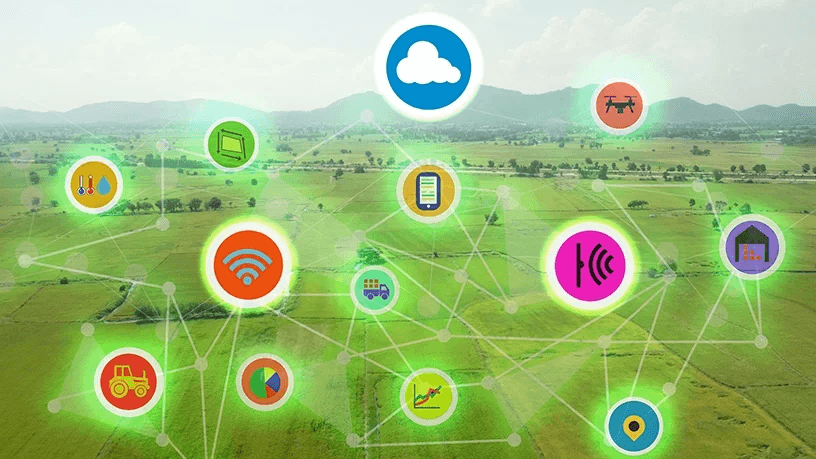
AI has emerged as a key catalyst enabling rural credit expansion by replacing collateral requirements and credit history with alternative data sources that traditional banks cannot efficiently process at scale.
The Four Alternative Data Categories
Farm and household data collected via mobile applications during farmer onboarding captures information about land size, crops planted, household composition, and agricultural experience that predicts repayment likelihood better than traditional credit scores.
Satellite and remote-sensing imagery validates farm locations, monitors crop health throughout growing seasons, and provides independent verification of farmer-reported data, reducing fraud while enabling real-time risk assessment.
Climate and weather data from meteorological services and satellite sources help lenders anticipate climate-related risks affecting specific farms, enabling proactive interventions such as insurance payouts or payment restructuring before harvest failures occur.
Mobile money and transaction histories reveal cash flow patterns, expense management, and financial behavior that predict repayment capacity more accurately than static income estimates that miss seasonal variability in agricultural revenues.
Why AI specifically matters: These data sources generate volumes exceeding human processing capacity. Machine learning algorithms identify patterns across thousands of variables that human loan officers cannot detect, automating decisions while improving accuracy and reducing processing costs from $50-100 per loan to under $5.
Case Study: Apollo Agriculture’s AI-Powered “Lend-to-Learn” Strategy
Founded in 2016, Apollo Agriculture operates in Kenya and Zambia, providing smallholder farmers with bundled services including credit, high-quality inputs, agronomic advice, and crop insurance through AI-powered platform demonstrating commercial viability of data-driven rural lending.
Apollo's credit assessment engine relies on data collected by field officers using mobile applications, manual verification by dedicated validation teams, integration of satellite imagery, and available credit bureau data where it exists. Final lending decisions are fully automated through machine learning models.
The innovation: Early in operations, Apollo adopted a "lend-to-learn" strategy, deliberately extending loans to diverse risk profiles to generate repayment data. Over time, machine learning models were trained to identify repayment patterns and refine risk prediction, improving from 70% accuracy to over 90% as the dataset expanded.
Seasonal loan structuring: Typical loans align with agricultural cycles, allowing repayment after harvest when farmers have cash flow from crop sales. This timing, combined with AI-based scoring, has enabled Apollo to scale lending while maintaining commercial viability without donor subsidies.
Seasonal Loan Structuring and AI Fraud Detection
As operations expanded, Apollo applied machine learning to detect fraudulent behaviour among both applicants and field agents. Behavioral data, such as device usage patterns and inconsistencies in submitted information, are analyzed to flag anomalies, helping ensure credit reaches legitimate farmers rather than being captured by intermediaries or fraudulent applications.
The fraud challenge: In markets with limited formal identity systems, loan applicants may submit false information about farm sizes, crop types, or household composition. Field agents may collude with applicants or fabricate applications entirely. AI detects these patterns through inconsistency analysis that would be impossible through manual review.
Impact Metrics: Yields, Inclusion, and Repayment Success in African Agriculture
Since launch, Apollo has supported nearly 400,000 farmers, with reported yield increases of 2-2.5 times national averages in Kenya through a combination of improved inputs, agronomic advice, and timely credit, enabling optimal planting and fertiliser application timing.
Roughly half of customers are women, highlighting digital finance's potential to improve inclusion in a sector where women farmers face additional barriers accessing traditional bank services, including discriminatory lending practices and cultural norms restricting women's financial autonomy.
Repayment rates above 85% demonstrate that smallholder farmers are creditworthy when provided appropriate loan structures, contrary to traditional banking assumptions that agricultural lending to smallholders is inherently unprofitable.
Zellow Observation: Apollo's 400,000 farmers reach over 8 years, demonstrating a sustainable scaling trajectory. At an average loan size of $150-200, this represents $60M-80M in cumulative credit deployment, proving that AI-enabled agricultural lending achieves commercial scale, not merely pilot program status.
The Broader AI Agri-Fintech Ecosystem
According to IFAD's 2023 assessment, the sector comprises pure agritech solutions (53%), bundled service providers offering inputs, advice, and finance (26%), and agri-focused fintech firms providing credit and insurance (21%).
Pula Advisors has delivered climate insurance to millions of farmers using remote sensing and automated claims processing, demonstrating AI applications beyond credit into risk management products that traditional insurers cannot profitably serve at the smallholder scale.
Farmerline (Ghana) deploys multilingual AI chatbots to support training, credit monitoring, and information access, addressing literacy and language barriers that prevent farmers from accessing digital services designed primarily for English-speaking, literate users.
EzyAgric (Uganda) provides value-chain digitization and input financing, using AI to match farmers with buyers and optimize logistics for input delivery and crop collection.
Studies cited by development institutions suggest access to digital credit and advisory services can increase farm productivity by 30-50% while maintaining repayment rates above 85%, validating that AI-enabled lending models combine financial inclusion with commercial sustainability.
Persistent Structural Constraints Limiting Scale
Despite progress, AI-driven agri-fintech faces limitations requiring hybrid models combining automation with human oversight.
Infrastructure gaps: Poor connectivity, unreliable electricity, and high data costs limit smartphone adoption and real-time data transmission necessary for AI systems requiring continuous farmer engagement and monitoring.
Data challenges: Low smartphone penetration and limited satellite resolution for small plots (under 2 hectares) reduce AI model accuracy, requiring manual verification that increases costs and limits scaling velocity.
Skills shortages: Scarcity of local AI talent and low digital literacy among farmers create dependencies on expensive expatriate technical staff and necessitate extensive farmer training programs before technology adoption.
Governance risks: Concerns around data quality, algorithmic bias favoring certain farmer profiles, and ethical AI deployment require regulatory frameworks that most African countries have not yet established.
Actionable Insights For Stakeholders
For Financial Institutions: Partner with established agri-fintech platforms like Apollo rather than building in-house AI capabilities. Provide wholesale funding to proven platforms with demonstrated repayment performance, capturing agricultural lending exposure without infrastructure investment.
For Investors: The 400,000 farmer reach, and 85%+ repayment rates validate commercial viability. Target Series B/C rounds in proven platforms expanding geographically or companies achieving product-market fit in underserved markets where competition remains limited.
For Policymakers: Invest in rural digital infrastructure enabling AI applications. Adopt the African Union's CAADP Strategy, integrating AI and digital tools as pillars of agri-food system transformation. Establish data governance frameworks protecting farmer data while enabling aggregation for credit assessment.
For Development Finance Institutions: Use catalytic capital to derisk early-stage lending, enabling platforms to build datasets. Once repayment performance is proven, facilitate commercial capital access, allowing DFI capital to recycle to next-generation platforms.
AI-enabled agri-fintech is reshaping how rural credit is delivered in Africa. By replacing collateral-based lending with data-driven risk assessment, firms like Apollo demonstrate that financial inclusion and commercial sustainability are not mutually exclusive, closing the gap trapping farmers in low-productivity cycles one AI-powered loan at a time.
More Insight from Real Life Users






















Insights that Drive Change
Empowering smarter decisions across business, policy, and research